

Methylene Blue Dosage: How to Titrate Low and Slow
Educational information only, not medical advice. Methylene blue is not intended to diagnose, treat, cure, or prevent any disease. Talk to a qualified healthcare professional before starting anything new, especially if you take medication. See our health & legal disclaimer.
The golden rule: low and slow
With methylene blue, more is not better. It is one of the rare compounds where the useful range is narrow and the effect is hormetic — a small amount behaves very differently from a large amount. Low doses act as an electron carrier that supports mitochondrial energy production. Push the dose too high and that same molecule starts to work against you. So the entire game is finding the smallest amount that does something for you, and stopping there.
How micro-dosing actually works
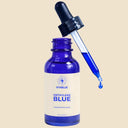
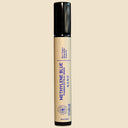
VitaBlue is formulated so the math is simple. Drops deliver roughly 250 mcg per drop (about 1 mg every four drops). The Nano spray delivers a similar ~250 mcg per spray. That granularity is the point: it lets you move up by fractions of a milligram instead of guessing.
Most people settle somewhere around 1–5 mg per day. That is a very small volume of liquid, which is exactly why a precise dropper or metered spray matters more than the size of the bottle.
A simple four-week titration framework
Think in weeks, not days. Your body gives you time to notice how each level feels.
- Week 1 — baseline. Start at roughly 1 mg (about 4 drops) in the morning, in water or juice. Note focus, energy, sleep, and mood.
- Week 2 — small step. If week 1 was uneventful and comfortable, move to ~2 mg. Keep it in the morning; methylene blue is stimulating for many people.
- Week 3 — find your ceiling. Nudge toward 3–5 mg only if you still feel you have headroom. The moment more stops adding benefit, you have found your dose.
- Week 4 — settle. Drop back to the lowest amount that gave you the effect you liked. That is your maintenance dose.
Drops or Nano for dosing?
Both give you the same compound and similar per-unit dosing. The choice is about context. VitaBlue Drops (30 ml) are ideal for at-home titration where you want to count precisely and mix into a drink. VitaBlue Nano (15 ml spray) is the no-spill option for travel and the gym bag. Many people keep both. For a full breakdown, read Drops vs Nano Spray.
When to hold or stop
Back off if you notice headache, nausea, restlessness, or that jittery over-caffeinated feeling — these often signal you have gone past your range. Blue-tinted urine is normal and harmless; it is simply the pigment clearing.
Safety first — read this before your first drop
Methylene blue is a monoamine oxidase inhibitor at higher doses. Do not combine it with SSRIs, SNRIs, MAOIs, or other serotonergic medications — the combination can cause serotonin toxicity. Avoid during pregnancy and breastfeeding, and if you have G6PD deficiency. Our full guide covers this in depth: Is Methylene Blue Safe? Side Effects & Interactions.
Quick answers
What time of day? Morning. It is energizing and can disrupt sleep taken late.
With or without food? Either works; some prefer it with a little food to avoid stomach upset.
Daily or cycled? Many people use it on workdays and take weekends off. Listen to your own response.
Purity is the foundation of safe dosing. Every VitaBlue batch is USP pharmaceutical grade and third-party lab tested — see how to verify that in How to Read a Certificate of Analysis.