

How to Read a Methylene Blue Certificate of Analysis (COA)
Educational information only, not medical advice. See our health & legal disclaimer.
Why purity is a safety issue, not a marketing one
Methylene blue is sold for many things — aquariums, textile dye, lab staining. Most of it is nowhere near clean enough to put in your body. Industrial-grade methylene blue can carry heavy metals like arsenic, lead, and cadmium, plus manufacturing contaminants. The molecule is identical on paper; the impurity profile is what separates a supplement from a hazard. That is why the single most important document a seller can show you is a Certificate of Analysis.
What a Certificate of Analysis actually is
A Certificate of Analysis (COA) is a lab report for a specific production batch. A credible one comes from an accredited third-party lab — not the seller's own claims — and ties back to a batch number you can match to the bottle. If a brand cannot produce one, treat that as your answer.
The lines that matter
- Grade / assay purity. Look for USP pharmaceutical grade and an assay of roughly 99% or higher. “Reagent” or “technical” grade is not for consumption.
- Heavy metals. Arsenic, lead, cadmium, and mercury should each be listed and reported below strict limits (often shown as “<” a small ppm value, or “pass”). Vague wording here is a red flag.
- Loss on drying / water content. Confirms the powder is what it claims and not diluted with moisture.
- Batch / lot number and date. The COA should name a specific lot and be recent. A single COA reused for years across every batch is not real batch testing.
- Lab identity. An independent, named laboratory — ideally ISO-accredited — signs it.
Red flags at a glance
Walk away when you see: no COA at all; a COA with the lab name or batch number removed; “for research use only” with zero purity data; prices that are far too low for pharmaceutical grade; or a stabiliser/solvent blend the seller will not disclose.
How VitaBlue handles it
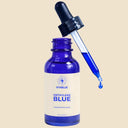
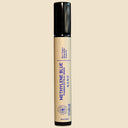
Every VitaBlue batch is USP pharmaceutical grade, made in Europe, and third-party lab tested heavy-metal and toxin free — with the certificate shown on the product page, not buried. You can see it on VitaBlue Drops and VitaBlue Nano. Purity is also what makes precise dosing possible; if you are new, start with our low-and-slow dosage guide.
The bottom line
The compound is only as good as the batch it came from. A brand that tests every batch and shows the paperwork is telling you something a discount seller cannot. When it goes in your body, that difference is the whole point.