

Why European-Made Methylene Blue? Sourcing, Manufacturing & Regulation
Educational information only, not medical advice. Methylene blue is not intended to diagnose, treat, cure, or prevent any disease. See our health & legal disclaimer.
Methylene blue is a dye before it's anything else. That single fact explains most of the quality problem. The same molecule that colors your tongue blue is manufactured by the ton for textiles, aquariums, and lab staining. Very little of it is made to be swallowed. So when you buy methylene blue, the real question isn't "is it methylene blue?" It's "which methylene blue, made for what, tested by whom?"
The purity problem hiding in a blue bottle
Industrial and reagent-grade methylene blue can carry heavy metals like arsenic, aluminium, cadmium, and lead, plus organic contaminants left over from synthesis. These aren't exotic edge cases. They're normal byproducts of making a dye cheaply at scale. For a textile mill, trace arsenic is irrelevant. For something you drop under your tongue daily, it isn't.
This is why grade matters more than price. Pharmaceutical (USP) grade methylene blue is held to strict limits on exactly these contaminants. If you want the full breakdown of the labels, read our guide on USP vs reagent vs technical grade. The short version: the grade on the label is a promise about what's not in the bottle.
Why "made in Europe" is a real signal, not a flag sticker
Plenty of supplements slap a flag on the box. European pharmaceutical manufacturing is different because of what sits behind it: enforceable standards and inspection.
European Pharmacopoeia (Ph. Eur.) and GMP (Good Manufacturing Practice) frameworks govern how pharmaceutical-grade compounds are produced, documented, and tested. Facilities are audited. Batches are traceable. Impurity limits are written into law, not left to a supplier's word. That regulatory backbone is the difference between "we say it's pure" and "here's the paperwork proving it."
VitaBlue is USP pharmaceutical grade, made and third-party lab-tested in Europe. That last part matters as much as the first.
Third-party testing: the step that can't be skipped
In-house testing is a manufacturer grading its own homework. Independent, third-party lab testing sends each batch to an outside lab that has no stake in the result. It confirms identity, potency, and — critically — that contaminant levels sit within safe limits.
The document that captures all of this is the Certificate of Analysis. Knowing how to read one turns a marketing claim into something you can verify yourself. We wrote a full walkthrough on how to read a methylene blue COA. If a seller can't produce one, that tells you something.
What clean sourcing means for your daily routine
Purity isn't only a safety story. It's also a consistency story. When a batch is standardized, each drop and each spray delivers a predictable amount — VitaBlue is formulated at roughly 250 mcg per drop and per spray, with no fillers. That consistency is what lets people titrate carefully instead of guessing.
Most users settle around 1–5 mg per day. Predictable dosing per drop is what makes that kind of low-and-slow approach possible in the first place. Fillers, dyes-within-dyes, and batch-to-batch drift make it a moving target.
A few safety notes before you ingest anything
If you're planning to take methylene blue by mouth, a few rules are non-negotiable. Methylene blue must not be combined with SSRIs, SNRIs, MAOIs, or other serotonergic drugs, because the combination can be dangerous. It is not appropriate during pregnancy or breastfeeding, and not for anyone with G6PD deficiency. If any of these apply to you, talk to a qualified clinician before considering use at all.
How to vet any methylene blue seller
Whether you buy from us or anyone else, the checklist is the same:
- Grade: Is it explicitly USP pharmaceutical grade — not "high purity," not "lab grade"?
- Origin: Where is it actually manufactured, and under what regulatory framework?
- Testing: Is there a recent, batch-specific third-party COA you can actually see?
- Formulation: Fillers and additives, or just methylene blue and a clean carrier?
- Dose clarity: Do they state the amount per drop or spray, so you can titrate?
A brand that answers all five without flinching is telling you it has nothing to hide.
The bottom line
Methylene blue is only as good as the process behind it. A dye made for fabric and a pharmaceutical-grade compound made for people can share a chemical name and share almost nothing else. European manufacturing, USP grade, and independent testing aren't marketing garnish — they're the mechanism that keeps contaminants out and consistency in.
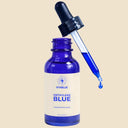
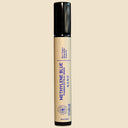
If you want that peace of mind in your routine, start with the format that fits your life: the classic VitaBlue drops for at-home use, or the VitaBlue nano spray for when you're on the move. Same pharmaceutical-grade methylene blue, made and tested in Europe.