

Methylene Blue for Deep Work: A Practical Focus Routine
Educational information only, not medical advice. Methylene blue is not intended to diagnose, treat, cure, or prevent any disease. See our health & legal disclaimer.
Focus is not willpower. It is a set of conditions you build before you sit down. Get the conditions right and the work pulls you in. Get them wrong and no amount of grinding saves the hour.
Deep work is the uninterrupted, cognitively demanding block where your hardest thinking actually happens. Writing. Coding. Analysis. Strategy. The kind of work that fragments the moment a notification lands. Many people who use methylene blue report that it helps them settle into these blocks and stay there. Below is a practical routine you can run tomorrow. It is about structure first, and where methylene blue fits inside that structure.
Why methylene blue shows up in focus routines
Methylene blue is being explored for its role at the mitochondrial level, where cells produce energy. Early research looks at how it interacts with the electron transport chain and cellular oxygen use. We are not going to overclaim. What people report is a steady, quiet alertness rather than a jittery push. That profile is what makes it interesting for long thinking sessions, where the goal is a calm, sustained state, not a spike.
If you want the underlying science instead of the routine, start with our overview of methylene blue for energy and focus and its use as a nootropic. This article assumes you already want to build the block.
The routine, step by step
1. Take it early, and take it low
Dose in the morning or early afternoon. Methylene blue can be stimulating for some people, so an evening dose risks working against your sleep. VitaBlue delivers roughly 250 mcg per drop or per spray, and most users settle around 1–5 mg per day. That is a small, deliberate amount. Start at the bottom of that range and hold there for a few days before adjusting. More is not more focus.
New to dosing? Read our dosing guide before your first block.
2. Set a hard start and a hard stop
Pick a fixed window. Ninety minutes is a strong default; it matches the natural rhythm of sustained attention and it is long enough to reach the good part. Put it on the calendar as a real appointment. A block with no end time drifts. A block with a finish line has urgency.
3. Remove the exits before you begin
Distraction wins when it is one tap away. Close the tabs. Phone in another room, not face-down on the desk. Notifications off, not on silent. The single highest-leverage move in any focus routine is making interruption physically inconvenient. Do this in the two minutes before you start, not during.
4. Define one output, not a to-do list
Before the block, write one sentence: what will exist at the end that does not exist now. A finished draft section. A working function. A decision made. One concrete artifact. A vague intention ("work on the report") invites wandering. A defined output gives your attention a target.
5. Stack caffeine carefully, if at all
If you already run on coffee, you can pair it with methylene blue, but time it so the two peaks do not turn into a crash later. We break down the details in methylene blue and caffeine. The short version: let caffeine handle the initial lift, and don't chase a second cup mid-block to rescue fading attention. That is usually a signal to take a real break, not to redose.
6. Protect the recovery, especially sleep
Deep work is a withdrawal from a finite account. What you do after the block determines whether tomorrow's block is any good. Walk. Eat. Step outside. And guard your sleep — timing matters, which is exactly why the morning dose exists. See methylene blue and sleep for the timing details.
A sample morning block
- 8:00 — Low dose with water. One or two drops, or a spray, depending on where you are in your range.
- 8:05 — Coffee if that is your habit. Phone leaves the room.
- 8:10 — Write the one-sentence output. Open only the tools that produce it.
- 8:15–9:45 — The block. No tabs, no messages, no exceptions.
- 9:45 — Hard stop. Stand up, move, look at something far away. Recovery starts now.
Safety first, always
Because this routine involves ingesting methylene blue, a few non-negotiables. Methylene blue must not be combined with SSRIs, SNRIs, MAOIs, or other serotonergic drugs — the interaction is serious. It is not for use during pregnancy or breastfeeding, and not for anyone with G6PD deficiency. If any of these apply to you, or you take prescription medication, talk to a qualified professional before starting. None of this is a substitute for medical advice.
Why quality matters for a daily routine
If you are putting something in your body every working morning, purity is not optional. VitaBlue is USP pharmaceutical grade, made and third-party lab-tested in Europe, with no fillers. That matters more for a daily habit than for a one-off. The consistent per-drop and per-spray dosing is what makes a routine like this repeatable — you know exactly what you are taking each time.
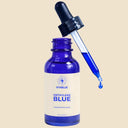
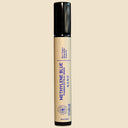
Ready to build your blocks around it? The VitaBlue drops are the simple starting point for a desk routine, and the nano spray keeps the same routine intact when you are away from home. Pick one, keep the dose low, and let the structure do the heavy lifting.