

Methylene Blue and Antioxidants: How It Fits a Broader Routine
Educational information only, not medical advice. Methylene blue is not intended to diagnose, treat, cure, or prevent any disease. See our health & legal disclaimer.
Vitamin C, glutathione, CoQ10, methylene blue — the antioxidant shelf gets crowded fast. Stack them wrong and you're not doing more, you're just doing redundant. Here's how methylene blue actually fits, instead of just adding noise to a routine that's already full.
What "antioxidant support" actually means
Oxidative stress happens when free radicals outpace your body's ability to neutralize them. Most classic antioxidants — vitamin C, vitamin E, glutathione — work by directly mopping up those free radicals, getting used up in the process. You take more, you replace what got spent.
Methylene blue works differently. Early research has explored its role as an alternative electron carrier in the mitochondrial electron transport chain, where it can help keep electrons flowing efficiently rather than leaking out and forming excess free radicals in the first place. That's a mechanism worth understanding on its own terms — it's not a like-for-like swap with vitamin C, and it's not a stronger version of it either.
Where it fits differently
Think of it in two buckets. One bucket is "clean up the mess" — classic antioxidants neutralizing radicals after they form. The other is "make less mess" — supporting the process upstream, at the mitochondria, before oxidative byproducts pile up. Methylene blue sits mostly in that second bucket, which is why people report pairing it with, rather than swapping it for, their existing antioxidant stack.
This is also why it shows up alongside light-based routines. Our piece on red light therapy and methylene blue covers how the two interact at the mitochondrial level — both are about supporting cellular energy production rather than scavenging radicals directly.
Building a stack without overlap
A few practical principles people use when combining methylene blue with a broader antioxidant routine:
- Separate timing where you can. Taking everything at once makes it hard to tell what's doing what, and some combinations are better spaced out through the day anyway.
- Start low across the board. If you're adding methylene blue to an existing stack, introduce it on its own for a couple of weeks before layering in anything new. That way you know what it's actually doing for you.
- Don't double up on mechanism for its own sake. More antioxidants isn't automatically better — the goal is coverage, not volume.
Fasting is another routine people pair it with, since both influence mitochondrial function through different levers. We go into that combination in our fasting and methylene blue guide.
Dosing and safety when combining
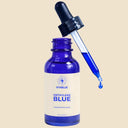
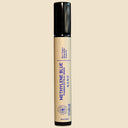
Most users settle around 1–5 mg of methylene blue per day, titrated up slowly rather than started high — our drops and nano spray are both dosed at roughly 250 mcg per unit, which makes small, steady increases easy to manage.
One rule doesn't bend for a "stack": methylene blue must not be combined with SSRIs, SNRIs, MAOIs, or other serotonergic medications, and it isn't appropriate during pregnancy, while breastfeeding, or with G6PD deficiency. This applies whether you're taking it alone or alongside a full supplement routine — check your full stack against this list, not just methylene blue in isolation.
A few common questions
Does methylene blue replace vitamin C or glutathione? No. It works through a different mechanism — supporting mitochondrial electron flow rather than scavenging free radicals directly — so it complements those rather than substituting for them.
Can I take it at the same time as my other antioxidants? Some people do without issue; others prefer to space it out so they can track how each addition feels. There's no universal rule here, which is part of why starting low and adjusting slowly matters more than the exact schedule.
Is more always better for oxidative stress support? No. Piling on more compounds that do the same job rarely adds much, and can make it harder to isolate what's actually helping. Coverage across different mechanisms tends to matter more than sheer volume.
A simple daily rhythm
Many people keep it straightforward: methylene blue in the morning with or shortly after food, classic antioxidants spread through the day as usual, and no attempt to "maximize" by adding more of everything at once. The point of a stack is that the pieces do different jobs — not that every piece does the same job harder.
If you're building out a broader routine and want a USP-grade option with no fillers to start with, our drops are the simplest way to add methylene blue at a dose you control from day one.